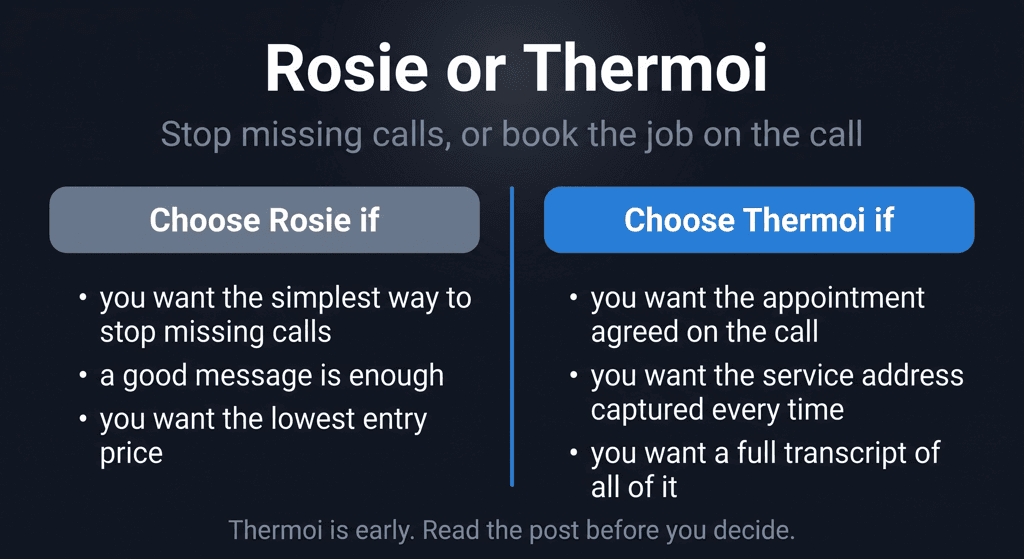
If you are still deciding whether an AI receptionist can do what your answering service does, start with our AI vs traditional answering service comparison. This post is for the next step: you think it might, and you want to find out on your own calls without a single night where the phone goes unanswered.
The plan below runs both side by side for 30 days, splits the calls so each one is tested fairly, and ends with a decision you can make from your own records instead of a sales pitch.
Before you change anything
Two pieces of homework, both about the service you have now.
Read your agreement. Find the notice period, any minimum term, and how overage is billed. Many answering services price at $200 to $500 a month, often with per-minute charges on top. Look at what you paid last July or last January, not last April. The notice period matters most, because it sets the date your test has to finish by if you decide to switch.
Pull last month's messages. Ask the service for every message it sent you in the last 30 days. Count them, then count how many had a full service address, a callback number that worked, and enough about the problem to decide what to do. That count is your baseline. Without it, you will be comparing the AI against your memory of the service, and memory is generous.
Split the calls, don't double them
One call can only ring through to one place, so you cannot send the same call to both. Split them instead. There are two clean ways to do it.
- Split by time. The answering service keeps weeknights. The AI takes Friday evening through Monday morning. Halfway through the month, swap. Each one then gets tested on both kinds of night, and neither gets all the easy calls.
- Split by overflow. Most phone carriers let you forward calls you don't pick up. Set the daytime no-answer forwarding to the AI, so it catches the calls your office misses while everyone is on a job, and leave nights with the service. Check what your carrier allows before you plan around it.
Splitting also keeps the test inside a free month. Thermoi's first month covers up to 40 calls, and a weekend slice or a daytime overflow slice of a small shop's calls usually fits.
Week one: set up and listen
Setup with Thermoi is one onboarding call. You tell us your business name, your services and how you want the phone answered, and Sara is set up to answer as your company. Two free months run at a time, so your start date may be a week or two out. Book it so the test finishes before your answering service's notice date.
Before you forward anything, call the line yourself. Our list of eight test calls to make before you buy takes about twenty minutes, and it is better to hear the rough edges from your own phone than from a customer.
Then turn on the forwarding for your slice and read every transcript that week. All of them. Half of what you learn that week is what your callers really say, which is useful whichever way you decide.
Week two: swap the slices
If you split by time, swap now. The AI takes weeknights, the service takes the weekend. Keep reading the records from both. By the end of the week you will have seen each one handle a 6pm no-cooling call, a Saturday morning tune-up booking and a few calls that were really for someone else.
If something in the AI's answers is wrong for your shop, say so now rather than at day 30. With Thermoi you tell us, and we change Sara's setup.
Weeks three and four: keep score
Score both services on the same calls, using the same questions. Keep it simple enough to fill in on a phone:
- What reached you: a relayed message, or the call itself as a summary and transcript.
- How many calls had a correct address, a working callback number and the problem in the caller's words.
- How many routine calls ended with a day on the books, without you calling back to arrange it.
- How long your team took to act on each after-hours call. That one measures your routine more than either service, though a better record usually shortens it.
- Anyone who complained, hung up early, or brought up the call when the tech showed up.
- What each one billed for the calls it handled.
Day 30: decide
Line the scores up against your baseline from the first step. Neither month will be perfect. The question is which one left you with calls you could act on without a second conversation.
If the AI wins, give notice to the answering service under the terms you read before the test started, and keep it running until the notice period ends. Move the rest of your forwarding to Sara once it does. That way there is no gap. With Thermoi, month two is a $299 invoice at day 30, for up to 200 calls a month, and month two starts once it is paid. The 30-day money-back guarantee runs from that first payment, since the free month takes no card and so has nothing to refund.
If it doesn't, remove the forwarding and your line is back to how it was. You owe nothing for the free month, and you have a month of transcripts showing what your callers ask.
What doesn't change when you switch
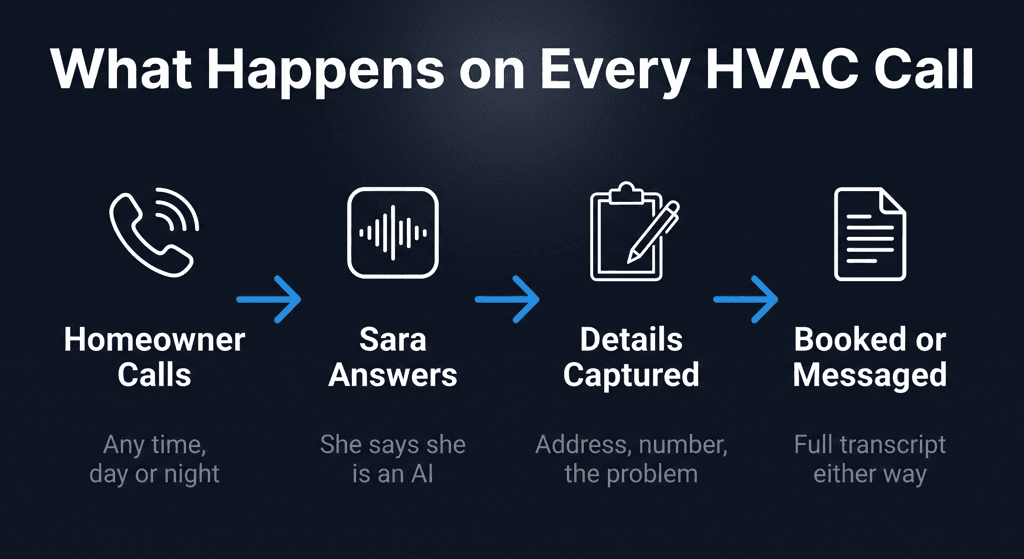
The callback is still yours. An answering service relays a message and an AI receptionist hands you the whole call, but neither one sends a tech out. Sara does not transfer calls or decide which ones are emergencies. She gets the details down and books the routine work, and your team decides what happens next. If your overnight routine is "someone checks messages at 7am," our post on working the overnight call list is worth reading before you switch.
For the full picture of what Thermoi answers and what it costs, see the HVAC answering service page and pricing.