
HVAC call handling guide
Six practices for after-hours calls, emergencies, peak season and scheduling, how the main tools compare, and articles that go deeper. Tick what your shop does today to see what to fix first.
0 of 6 in place
Fix next: every call answered, day or night
Start with answering. Nothing else on this list works on a call that went to voicemail.
Six call-handling practices
What separates the shops that keep their after-hours jobs from the ones that lose them to voicemail, in the order to fix them.
Answer every call, day or night
Breakdowns happen at 2am and at weekends, and the contractor who answers first usually gets the job. Whether it is a person, an answering service or an AI receptionist, something has to pick up.
Write the problem down in the caller’s words
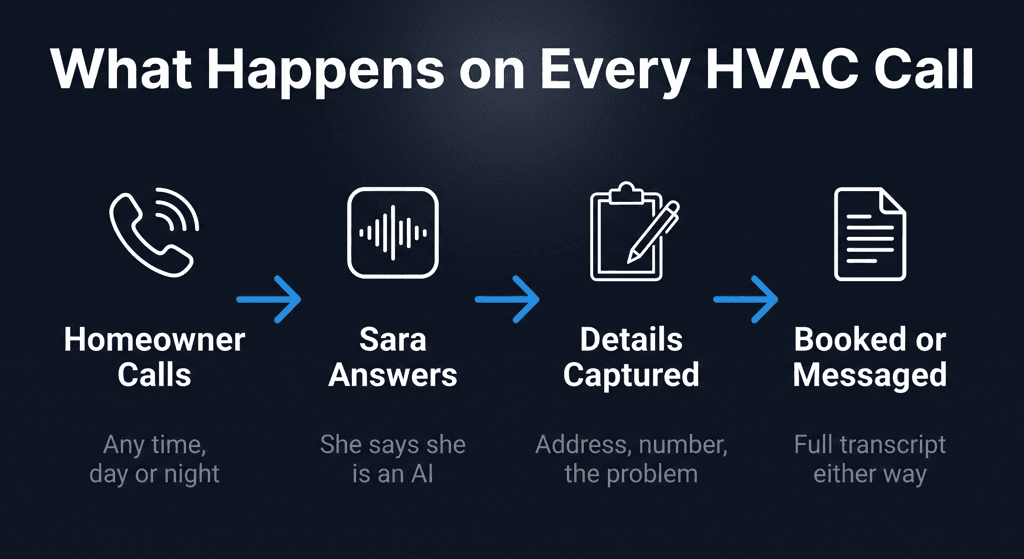
What the equipment is doing, how long it has been that way, and anything about who is in the house, along with the address and a callback number. Your tech arrives knowing what to expect.
Take the booking on the first call
Callbacks lose jobs. When a caller is ready to book, take the day and part of the day they want and read it back, instead of adding them to tomorrow’s callback list.
Read the evening’s calls the same night
Decide who reads the after-hours calls and when. Treating every call as routine means emergencies wait until morning; reading them that night is how you catch the ones that cannot.
Test your on-call chain
Walk it end to end before peak season: how a late call reaches the person on call, how long each step takes, and where it breaks. Then shorten the slow steps on your side.
Record and count every call
If you are not measuring answer rate, booking rate and how many calls turn into jobs, you cannot improve them. Every call should leave a record you can read.
How the main tools handle calls
Most HVAC software schedules well and leaves answering the phone to people. Here is how the main options handle the call itself. Prices change; check each vendor before deciding.
- ServiceTitan
- Large multi-location operations. People answer; it manages the job after. After hours: needs staff.
- $398 to $698/mo+
- Housecall Pro
- Small and mid-size shops. People answer; no AI call answering. After hours: voicemail unless staffed.
- $49 to $349/mo
- Jobber
- Solo operators and small crews. People answer; no call automation. After hours: voicemail unless staffed.
- $19 to $349/mo
- Traditional answering service
- Shops that want a human voice. Operators take messages. After hours: yes, 24/7 operators.
- $200 to $500/mo, often per minute
- Thermoi Voice
- HVAC shops losing calls after hours. AI answers, asks, takes the booking, transcribes. After hours: yes, with a full transcript of every call.
- From $299/mo after a free month
Articles that go deeper
Showing 11 articles
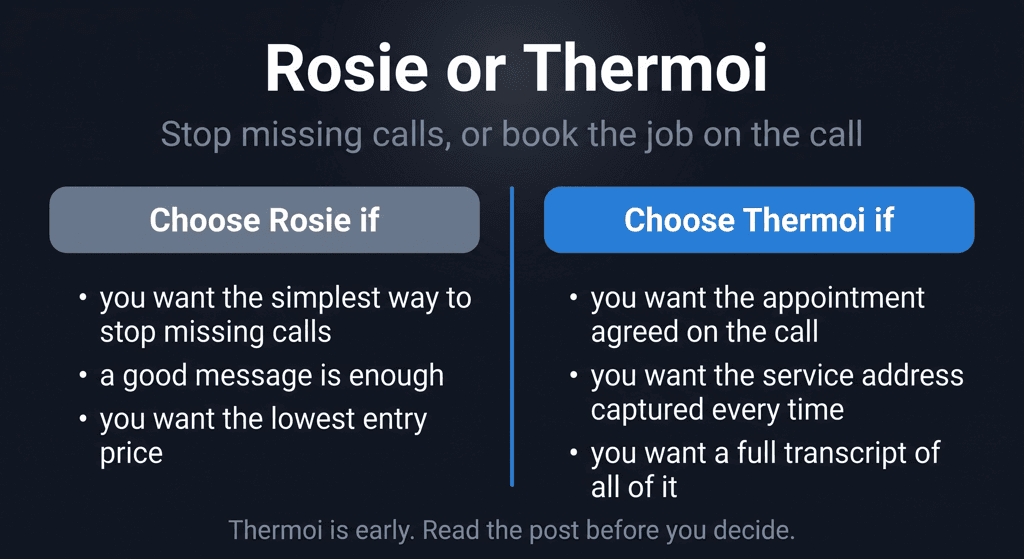 Rosie AI alternative for HVAC contractorsComparisons · 12 min read · Aug 10, 2026What Rosie AI actually is, where it genuinely fits an HVAC shop, and where a trade specific answering service makes more sense.
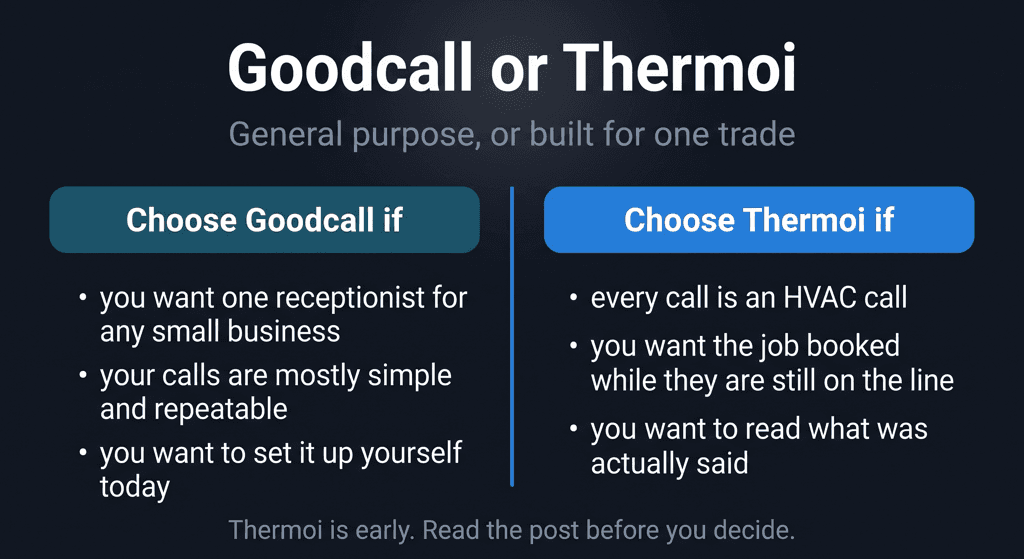 Goodcall alternative for HVAC contractors: an honest lookComparisons · 15 min read · Aug 3, 2026Comparing Goodcall for your HVAC shop? Here is what it actually does, who it genuinely fits, what makes HVAC calls different, and where Thermoi lands.
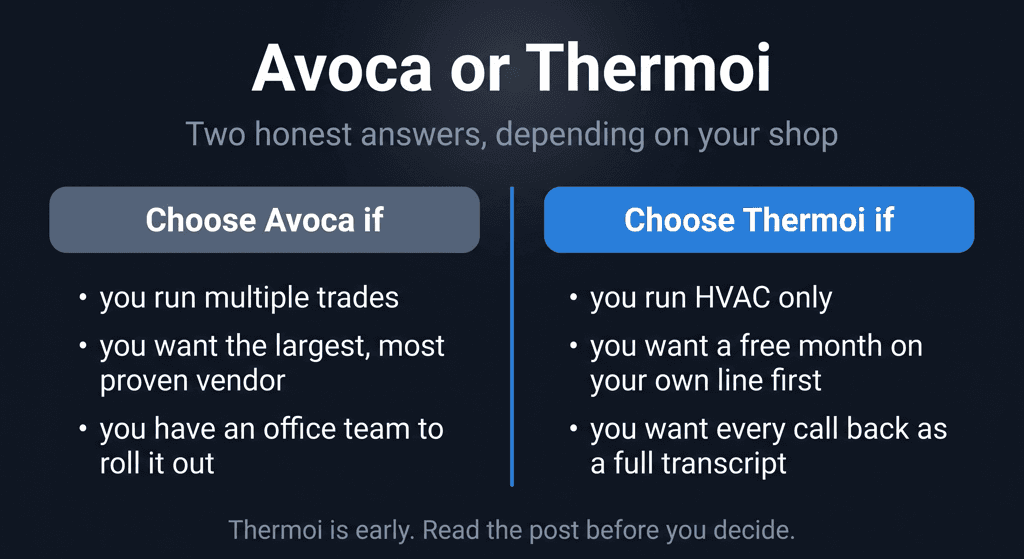 Avoca alternative for HVAC contractors: how to chooseComparisons · 11 min read · Jul 27, 2026Avoca is a full AI front office for the trades. Here is what it does, who it really fits, and when a smaller HVAC only answering service fits better.
 Emergency Dispatch vs Next-Day Scheduling: What HVAC Customers Actually WantOperations · 5 min read · Apr 10, 2026Treating every evening call the same costs you emergency jobs. How to tell an emergency from a routine booking, and who should make that call.
 Switching From an HVAC Answering Service to AITechnology · 4 min read · Apr 1, 2026Thinking of replacing your answering service with AI? How to run both side by side for 30 days, score them on your own calls, and switch with no gap in coverage.
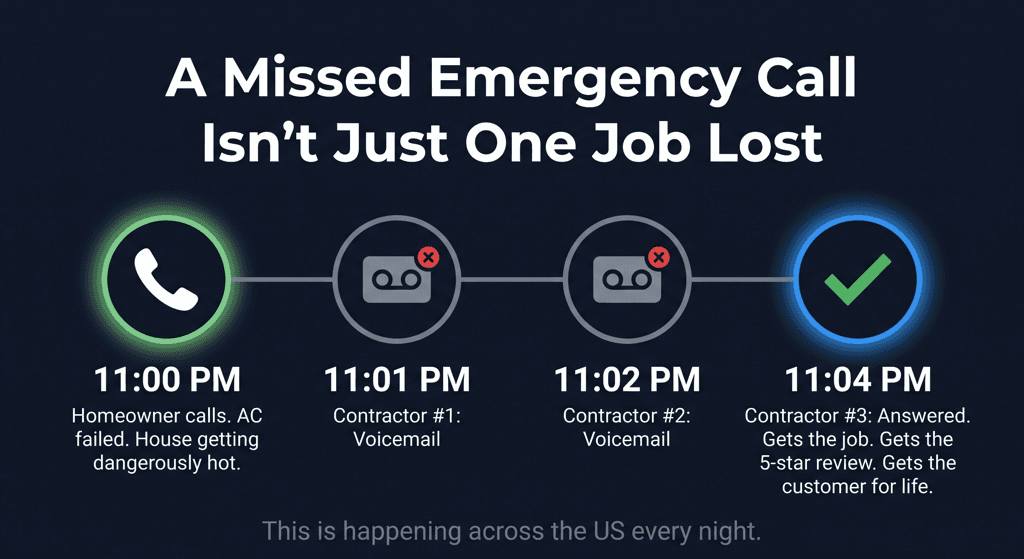 The Real Cost of a Missed HVAC Emergency CallBusiness Growth · 5 min read · Mar 23, 2026A missed routine call is a lost lead. A missed emergency call usually goes to a competitor along with years of follow-on work. What is really at stake after hours.
 HVAC Appointment Scheduling Software: What Contractors Actually Need in 2026Technology · 6 min read · Mar 16, 2026ServiceTitan, Housecall Pro, Jobber or AI? What HVAC scheduling software needs to do, where each option falls short, and how the pieces fit together.
- How Missed HVAC Calls Are Costing Your Business More Than You ThinkBusiness Growth · 5 min read · Mar 9, 2026Work out what missed calls cost your HVAC shop in four steps, with your own numbers, and see which windows leak the most.
 Test an HVAC AI Phone System With 8 CallsTechnology · 6 min read · Mar 2, 2026Every AI phone system sounds good in the demo. Eight test calls an HVAC owner can make in twenty minutes, what a good answer sounds like, and what to check after.
 5 Ways HVAC Contractors Can Prepare for Peak Season Call VolumeOperations · 5 min read · Feb 21, 2026Phoenix summer hits fast. Five things a small HVAC shop can do before peak season so the busiest weeks don't cost it the emergency jobs.
 The HVAC Callback That Keeps the CustomerCustomer Service · 5 min read · Feb 14, 2026The after-hours call got answered. Now what? A morning routine for sorting, returning and closing overnight HVAC calls before the customer books someone else.
Keep exploring
- 24/7 AI Phone SystemAnswer every call around the clock.
- After-Hours Emergency CallsThe 2 AM no-heat call gets answered instead of going to voicemail.
- Appointment BookingThe booking taken on the call, with the address and the day the caller wants.
- HVAC AI by CitySee how it works in your metro.
- Compare AlternativesThermoi against answering services and other AI receptionists.
- ROI CalculatorPut in your own numbers and see what missed calls cost.
Book your free demo
Hear how Sara answers, what she asks, and what comes back after the call, then get an ROI estimate for your shop.
Fifteen minutes on Google Meet. No obligation.
You'll get a Google Meet link by email. Calendar not loading? Open the booking page directly.